Wondering how to sell a Bannockburn estate on acreage without leaving money on the table? In a village shaped by large tracts, open space, and estate-style homes, selling here is rarely a standard plug-and-play process. If you want to price well, market the land correctly, and avoid preventable deal friction, it helps to understand what makes Bannockburn different. Let’s dive in.
Why Bannockburn acreage stands apart
Bannockburn was developed around country estates on large tracts of land, and that history still shows up in the way properties live and sell today. The village spans 1,318 acres about 30 miles north of Chicago and 4 miles west of Lake Michigan, with a land pattern still dominated by single-family residential acreage and open space.
That context matters when you sell. In many communities, a home on several acres is unusual. In Bannockburn, it is part of the village’s identity, which means buyers often look at the property as both a residence and a land asset.
The current CMAP snapshot also shows a small, mostly owner-occupied market, with 1,125 residents, 257 households, and 88.3% owner-occupied housing. For sellers, that usually means a narrower buyer pool and a stronger need for precise positioning from day one.
How lot size shapes value
Bannockburn’s zoning helps explain why acreage can carry so much weight in a sale. In the A residential district, the minimum lot area is 160,000 square feet, or about 3.7 acres, with a minimum width of 200 feet. In the B residential district, the minimum lot area is 80,000 square feet, or about 1.8 acres, with a minimum width of 142 feet.
Those are not minor details. They affect privacy, building envelopes, setbacks, future improvement potential, and how a buyer compares one property to another.
They also explain why simple price-per-square-foot thinking can miss the mark. When you sell a Bannockburn estate, the land utility, layout, open space, and improvement potential can matter just as much as the home itself.
Price beyond the house
A Bannockburn estate is often a one-of-one property. Even when another home has similar bedroom count or interior square footage, the lot shape, width, privacy, accessory structures, and site conditions may be very different.
That is why pricing should lean on adjusted comparable sales, parcel characteristics, and the practical value of the land. A broad lawn, usable acreage, permitted outbuildings, and a strong privacy buffer may support value in ways a standard suburban comp cannot fully capture.
Property taxes also need to be part of the pricing conversation early. Lake County notes that it collects and distributes property taxes for more than 200 taxing entities, and on an average bill, about 69% goes to schools, about 9% to cities and villages, and about 7% to Lake County. For many buyers, the annual tax bill is part of affordability, so pricing has to reflect the full cost of ownership.
Use parcel data before listing
Before setting a list price, it helps to review parcel-level information carefully. Lake County’s Chief County Assessment Office provides property characteristics, assessment data, and comparable property tools that can support pricing and tax review.
This step matters even more with large-lot properties because the recorded facts can influence both buyer perception and negotiations. If there is confusion around land size, assessed features, or improvement history, questions tend to surface later when leverage is weaker.
Lake County also notes that taxpayers can review their assessment notice and file an appeal if they believe the property is over-assessed. If taxes are a sticking point for likely buyers, understanding that picture in advance can help you prepare a cleaner listing strategy.
Market the estate, not just the rooms
With acreage homes, buyers are not only buying interior finishes. They are also evaluating the land, the privacy, the approach to the house, the usefulness of open areas, and the quality of improvements across the full site.
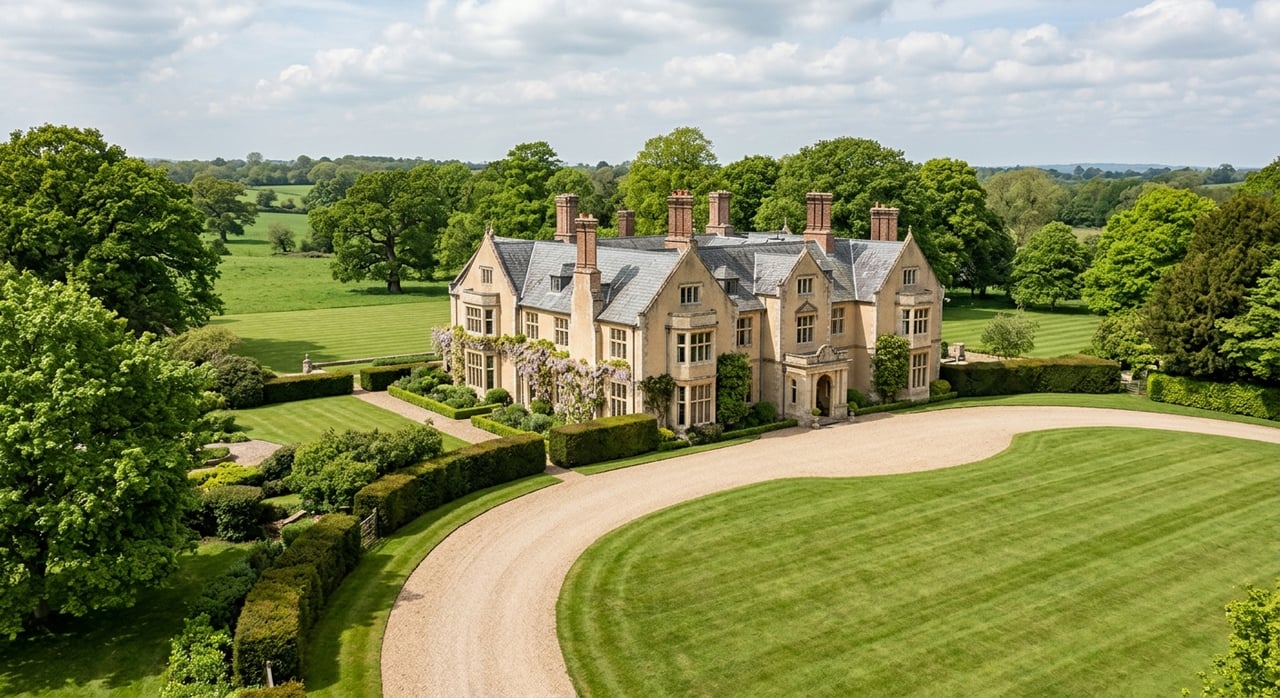
That means your marketing package should tell a complete story. Professional photography should show both the residence and the scale of the parcel, and aerial views can be especially helpful for illustrating lawn area, tree lines, outbuildings, and how the home sits on the land.
If the property includes estate-style features such as accessory buildings or horse-related facilities, those details should be presented carefully and accurately. Bannockburn’s code includes specific rules for accessory structures and horse keeping, and private stables may receive different height treatment than other accessory buildings. Buyers need a clear, factual picture of what exists and how it fits village regulations.
Document improvements clearly
In Bannockburn, the building and zoning process can be more involved than sellers expect. The village notes that architectural review may apply not only to a new single-family home, but also to a 600-square-foot shed, patio, or deck.
The village also says many projects require permits, including roofs, siding, fences, pools, exterior landscape lighting, accessory structures, and tree removals. For a seller, this means your pre-listing file should separate permitted improvements, older additions, and any features that may still require municipal review.
This is where a technically informed, hands-on approach can make a real difference. When your listing materials are organized and specific, buyers are more likely to focus on value and fit instead of worrying about unknowns.
Prepare for drainage and site questions
Large parcels often raise questions that smaller suburban lots do not. Buyers may ask about drainage, topography, low areas, detention, wetlands, or how stormwater moves across the property.
Lake County’s Watershed Development Ordinance sets countywide standards for floodplains, detention, soil erosion and sediment control, water quality treatment, and wetlands. Even if your property is not changing hands for redevelopment, these rules shape how buyers think about future improvements and site usability.
That is why existing surveys, topographic information, drainage notes, and strong site photography can be valuable before the home goes live. The more clearly you present the land, the easier it is for buyers to understand what they are buying.
Solve disclosure issues early
Luxury transactions often slow down over issues that could have been addressed before the listing launched. Illinois law requires a Residential Real Property Disclosure Report before the contract is signed, so sellers should prepare that document thoughtfully and early.
The law also states that the disclosure report does not limit the parties’ right to sell residential property in as-is condition. But timing still matters because if a material defect is disclosed after a contract is already signed, the buyer generally has 5 business days to terminate.
That creates risk if a problem surfaces late. In practical terms, early review of known conditions can protect your leverage and reduce the odds of a deal unraveling after you are already under contract.
Watch older-home issues closely
For older Bannockburn estates, pre-1978 construction can trigger lead-based paint disclosure requirements. Sellers of most pre-1978 housing must disclose known lead-based paint information and provide the required pamphlet.
Radon can also come up in Illinois transactions. The Illinois Emergency Management Agency says sellers must disclose unsafe radon information if they are aware of it, and the agency strongly recommends testing before purchase or occupancy, with mitigation recommended if results average 4 pCi/L or higher.
These issues do not automatically derail a sale. But they can affect timing, buyer comfort, and repair or credit discussions, especially when they appear late in the process.
Plan ahead for well and septic
If your estate has a private well or septic system, expect buyers or lenders to ask questions. The Lake County Health Department notes that well-and-septic evaluations are commonly requested in sales and refinancings and are often required by a lender or buyer.
The county also notes that these evaluations do not include pumping tanks or testing well flow rate, and further review by a licensed septic contractor may be recommended. In other words, a basic evaluation may not fully answer every buyer concern.
If your property has private systems, gathering service records and understanding current condition before listing can help keep negotiations from turning reactive.
Expect permit history to matter
Older estate properties often have a long improvement history. Over time, features like additions, sheds, pools, fences, lighting, landscaping work, or underground utility changes can become blurry in the paper trail.
Bannockburn’s code adds another layer because the village may inspect existing conditions before issuing permits and may review for unauthorized cross-connections among sanitary sewer, water, and stormwater systems. That means older underground systems, unpermitted work, or a buyer’s renovation plans can all become negotiation points.
If you can identify those issues before the listing date, you will be in a much stronger position to answer questions calmly and keep the transaction moving.
What sellers can do before going live
If you are preparing to sell a Bannockburn estate on acreage, a little front-end work can reduce surprises later. The goal is to make the property easy to understand, easy to evaluate, and easy to trust.
A strong pre-listing plan often includes:
- Reviewing parcel characteristics and assessment data
- Evaluating taxes as part of buyer affordability
- Organizing permits and records for major improvements
- Identifying any accessory structures or horse-related features that need clear explanation
- Gathering surveys, drainage notes, or topographic information if available
- Completing disclosure documents carefully and early
- Preparing for possible well, septic, radon, or lead-related questions
That kind of preparation supports better pricing, cleaner marketing, and stronger negotiations.
Selling a Bannockburn acreage estate is rarely about putting a sign in the yard and waiting. It takes careful pricing, clear documentation, strong presentation, and a real understanding of how land, improvements, and local rules shape value. If you want a listing strategy built for a complex North Shore property, Andra O'Neill brings a hands-on, technically informed approach to estate sales in communities like Bannockburn.
FAQs
How much land is typical for a Bannockburn home?
- Bannockburn’s residential zoning includes large minimum lot sizes, with about 3.7 acres in the A district and about 1.8 acres in the B district, which reflects the village’s estate-style history.
Why is pricing a Bannockburn estate harder than pricing a subdivision home?
- Fewer direct substitutes exist, so pricing depends more on adjusted comparables, land utility, privacy, accessory structures, improvements, and site conditions than on square footage alone.
What can delay a Bannockburn acreage home sale?
- Common friction points include late-discovered defects, disclosure timing, radon or lead issues, well or septic questions, and permit or municipal review questions tied to additions, sheds, pools, fences, lighting, or landscaping.
Do Bannockburn sellers need to disclose property problems?
- Yes. Illinois requires a Residential Real Property Disclosure Report before the contract is signed, and late disclosure of a material defect can affect the buyer’s ability to terminate.
Why do buyers ask about permits on estate properties in Bannockburn?
- The village says many exterior and site-related projects may require permits or review, so buyers often want clarity on whether improvements were properly approved and documented.
Are drainage and stormwater issues important when selling acreage in Bannockburn?
- Yes. Large parcels often bring more questions about topography, drainage, wetlands, floodplains, and future site use, so surveys, aerials, and site information can help buyers evaluate the property with confidence.